
A customer gets a WhatsApp message with a logo, name, and even a profile photo identical to a business they already have a relationship with. The message offers an "exclusive discount" or asks to "confirm" a pending payment, with a link leading to a fake payment page. The customer, recognizing the brand, doesn't hesitate to engage. The real business has no idea it's being impersonated until complaints start coming in from customers who never received what they paid for — and by then, the reputational damage is already done.
Why WhatsApp Is a Particularly Vulnerable Channel for This
Unlike email, where the sender's domain offers some technical verification, WhatsApp lets anyone set a profile name and photo identical to a legitimate brand's, with no real verification mechanism for personal accounts or even for many unverified WhatsApp Business accounts. The trust users place in the visual format — a recognizable logo, familiar communication tone — becomes exactly the vulnerability the attacker exploits.
The Most Common Variants of This Impersonation
Complete profile cloning, replicating the name, photo, and even the description of the official account, contacting customers with fake offers or payment requests.
WhatsApp numbers very similar to the official one, taking advantage of the fact that many users don't verify the full number before interacting, only the displayed name and photo.
Fake WhatsApp groups impersonating official customer communities, used to distribute malicious links or request information with the brand's borrowed credibility.
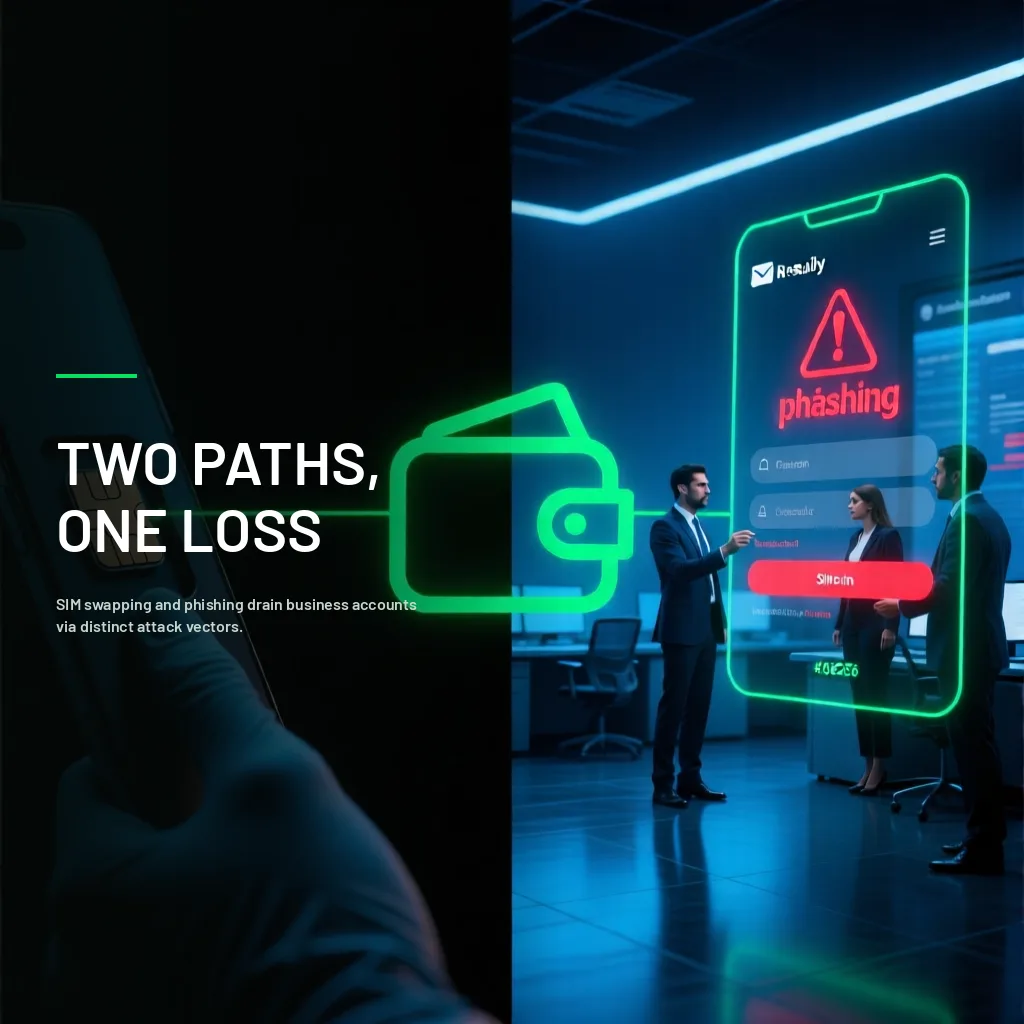
Messages that leverage real prior conversations, in cases where the business's real number was compromised (for example, through SIM swapping) and the attacker has direct access to the conversation history with real customers.
The Damage This Causes the Impersonated Business
Beyond the direct fraud against affected customers, the impersonated business faces reputational damage that can be disproportionate to the attack's actual reach — it only takes a few customers falling victim and sharing it publicly for trust in the brand's WhatsApp channel to be broadly compromised, even among customers who never received the fake message.
How to Detect and Respond to Your Brand Being Impersonated
Monitor brand mentions on social media and customer reports describing WhatsApp interactions your business doesn't recognize as its own — affected customers are often the first to flag the pattern.
Verify your WhatsApp Business account through Meta's official process, which adds a visible verification badge and makes direct name impersonation harder (though not impossible).
Establish and clearly communicate official channels to your customers — a single verified number, consistently communicated across your website and official materials — so any deviation is easier for the customer to spot themselves.
Report fake accounts directly to WhatsApp as soon as they're detected, documenting screenshots as evidence, and consider proactively communicating with customers about active impersonation campaigns.
Never request sensitive information or payments exclusively via WhatsApp without an additional verification mechanism — this also protects your legitimate business from accusations of suspicious behavior if a customer confuses your real communication with an impersonation.
How to Protect Yourself as a Consumer
Always verify the full number, not just the display name and profile photo, against the official number published on the company's website. Be wary of unusual offers or payment requests arriving without you having started the conversation, and apply the same out-of-band verification principles we cover in our guide on how to spot a phishing email — the format changes, but the verification logic is the same.
Frequently asked questions
Does verifying my WhatsApp Business account fully eliminate impersonation risk?
Not completely, but it significantly reduces how easily an attacker can convincingly clone your brand, and gives your customers an additional signal to tell legitimate accounts from fake ones.
What do I do if I discover a fake account impersonating my business?
Report it directly to WhatsApp with documented evidence, and consider alerting your customer base about the correct official channel to prevent more people from falling for the impersonation.
Do affected customers have any way to recover lost money?
It depends on the payment method used. If it was a direct bank transfer, reversal options are limited; if it was by card, there's a better chance of disputing it through the issuing bank.
Is this related to domain spoofing?
They're related in objective (impersonating a brand's identity to deceive its customers) but different in technical execution. We cover domain spoofing in our specific guide on that topic on the blog.
Let's talk
Your customers' trust in your brand is exactly what an attacker is trying to exploit when they impersonate your communication channel. At T.I. RESCUE we help businesses protect their digital reputation and respond quickly to this type of incident through our social engineering defense service. Has your brand been impersonated, or do you want to prevent it proactively? Let's talk.
Contact usYou may also like

Comments (0)
Be the first to comment.