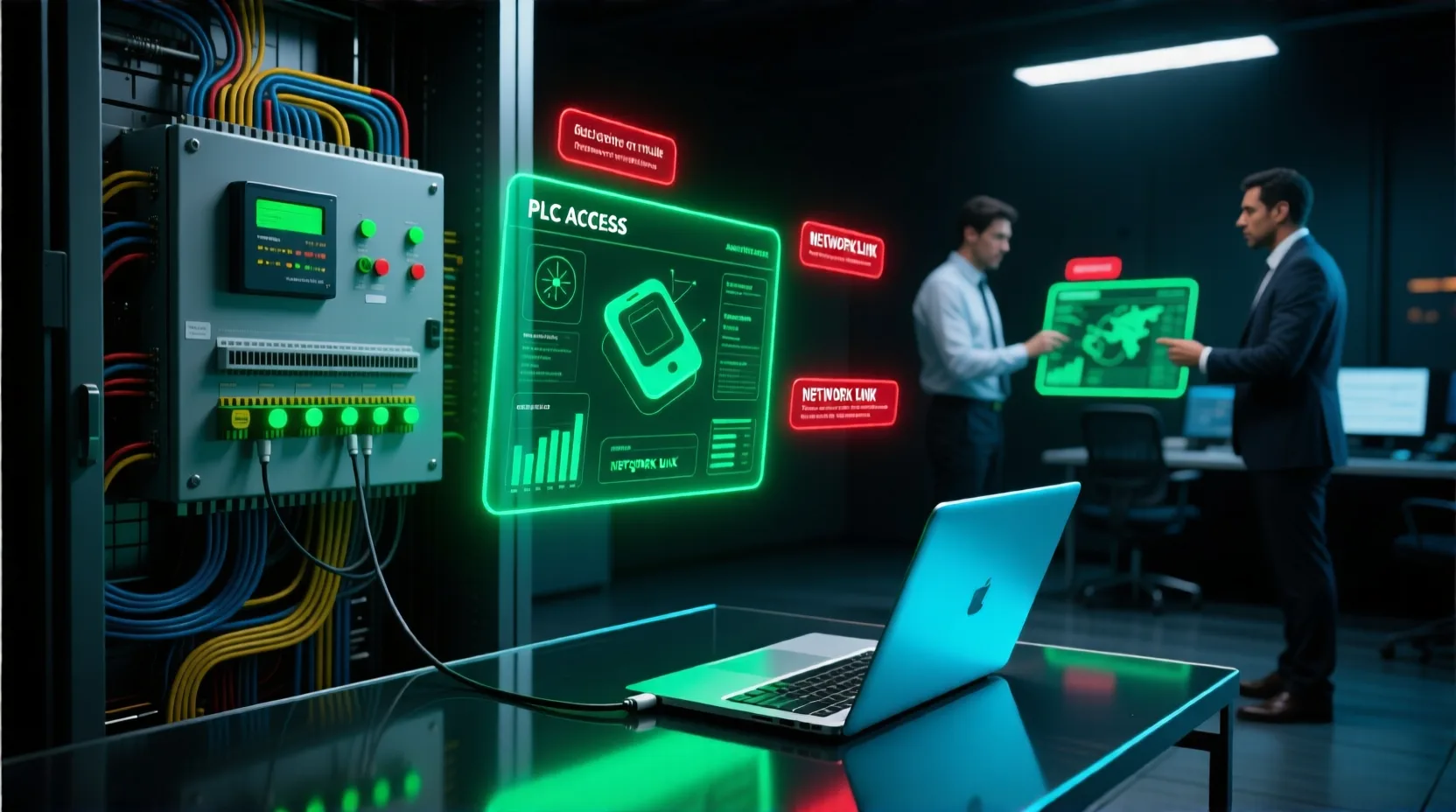
For decades, security for operational technology (OT) systems in manufacturing plants relied on a simple assumption: they were physically isolated from the internet, so there wasn't much to worry about. That assumption no longer holds. Industrial automation, remote monitoring, and the increasingly deep integration between corporate IT systems and plant-floor OT systems have opened up an attack surface the manufacturing industry is only just starting to take seriously.
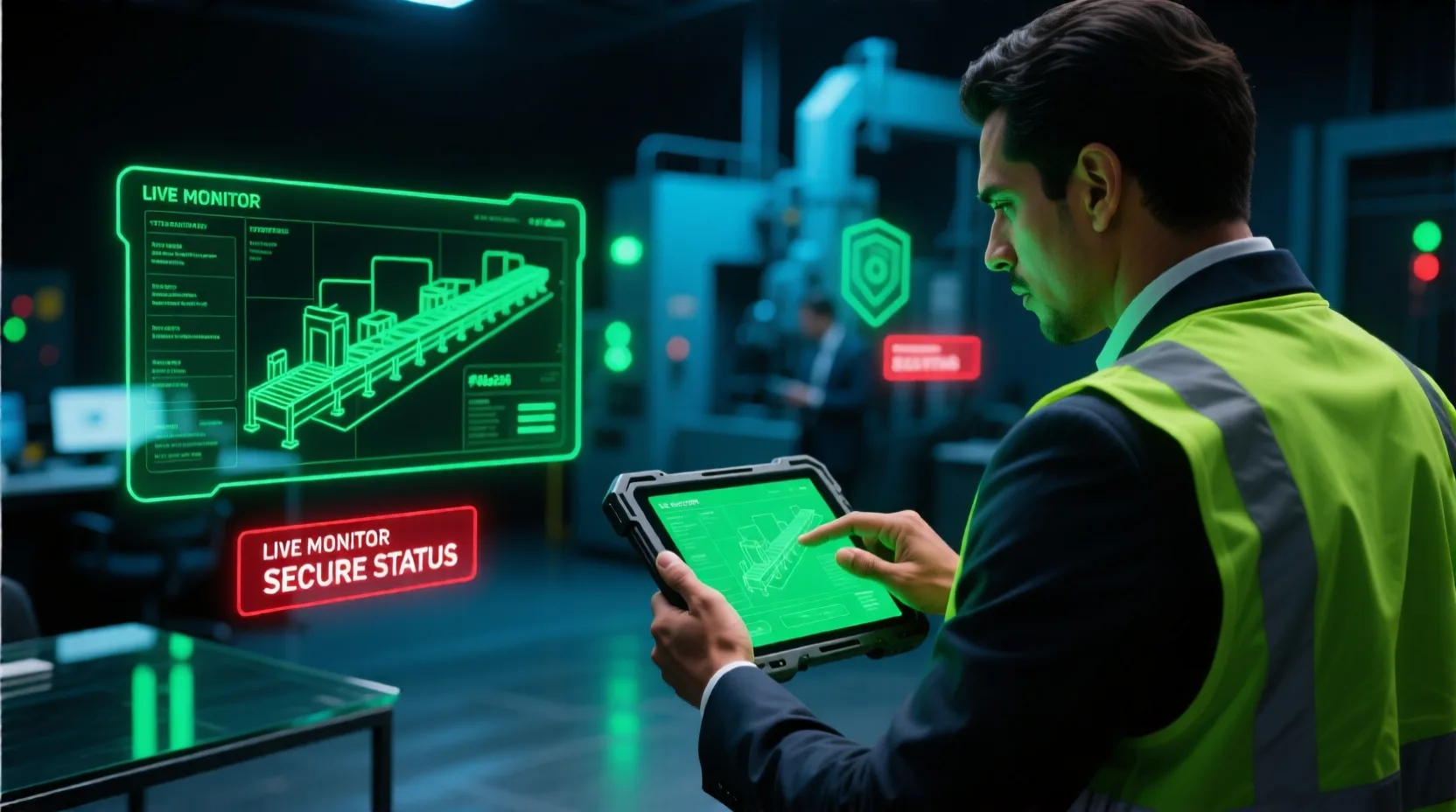
Controls and monitoring that stop the attack.
What Makes OT Security Different From Traditional IT Security
An OT system controls real physical processes — an assembly line, a temperature control system, an industrial valve. This fundamentally changes security priorities: in corporate IT, confidentiality is usually the top priority; in OT, availability and physical safety come first, because a failure doesn't just mean data loss — it can mean damage to expensive equipment, production disruption with direct financial losses, or in extreme cases, physical risk to plant personnel.
This difference in priorities also explains why many standard IT security controls can't be directly applied to OT environments — it's not always possible to simply "reboot" an industrial control system to apply a patch without halting production, and some industrial equipment has decades-long life cycles, running on operating systems that no longer receive security support.
How the Threat Landscape Has Changed
The convergence between IT and OT — driven by the need for remote monitoring, predictive maintenance, and real-time production data analysis — means a ransomware attack that compromises the corporate network no longer necessarily stays isolated there. If segmentation between IT and OT is weak, that same attack can reach plant control systems, halting full physical production, not just administrative systems.
Vulnerabilities Specific to the Industrial Environment
Industrial communication protocols not originally designed with security as a priority, many created assuming an isolated environment that no longer exists in practice.
Industrial IoT devices with minimal security by design, connected sensors and actuators that prioritize functionality and cost over robust security controls.
Legacy systems without active security support, equipment that stays operational due to replacement cost, but no longer receives security updates from the manufacturer.
Remote access for maintenance vendors, a real operational need that, without proper controls, becomes a poorly monitored external entry point.
How to Protect an OT Environment Without Halting Production
Strict network segmentation between corporate IT and plant OT, with clearly defined and monitored control points on any connection between the two environments.
Passive monitoring of OT traffic, which detects anomalies without interfering with control system operations, a viable alternative when directly updating equipment isn't possible without halting production.
Rigorous management of third-party remote access, with multi-factor authentication and time-limited sessions, instead of permanent, poorly supervised access.
Continuity plans specific to the production environment, distinct from corporate IT continuity plans, since the nature of the disruption and its impact are fundamentally different.
Security assessments specialized in industrial environments, performed by teams that understand OT's specific operational constraints, not a generic IT audit applied without adaptation.
Frequently asked questions
Is an OT system isolated from the internet really secure?
Isolation reduces risk but is rarely absolute in practice — maintenance access, USB devices, or temporary connections for updates often create gaps in that assumed isolation.
Why not just update legacy OT systems?
Replacement cost is often high, the equipment remains functionally adequate, and halting production for a major update has a direct operational cost — which is why security needs to be built around that reality, not ignore it.
How common is ransomware specifically targeting manufacturing?
Increasingly common globally, partly because manufacturing plants have low tolerance for disruption, which makes them, from an attacker's perspective, more likely to pay quickly to restore operations.
Do I need a team specialized in OT security, or is my current IT team enough?
OT security requires specialized knowledge distinct from traditional IT. Ideally, the IT team collaborates with OT specialists, either internal or through an external provider with specific experience in industrial environments.
Let's talk
Protecting an industrial environment requires understanding both cybersecurity and the plant's real operational constraints. At T.I. RESCUE we work on cybersecurity audits and infrastructure adapted to manufacturing environments. Has your plant assessed the security of its OT systems? Let's talk.
Contact usSet this site as a preferred source on Google
You may also like


Comments (0)
Be the first to comment.