
Responsible AI Audit: A Guide for Companies Implementing Deep Learning and Generative Models
From Generative AI to Reputational Risk
Free tool: ISO 42001 Self-Assessment. Measure in 5 minutes how well-governed your company's AI is against ISO/IEC 42001.
The adoption of Artificial Intelligence (AI) has shifted from being a competitive advantage to an operational necessity. More and more companies are implementing Deep Learning and generative AI models—such as LLMs and image generation models—to automate processes, analyze large volumes of data, and create content at scale.
However, this accelerated adoption has opened a new risk front: irresponsible AI. Unaudited models can generate discriminatory biases, unexplainable decisions (black box effect), and regulatory non-compliance with legal and reputational impact. Today, auditing no longer limits itself to traditional cybersecurity: responsible AI has become a key pillar of corporate risk management.
The Three Pillars of Responsible AI Auditing
An effective AI audit goes beyond infrastructure and addresses the ethics, governance, and resilience of the model.
1. Explainability (XAI) and Transparency
The Explainable AI (XAI) principle is essential to reduce the opacity of complex Deep Learning models.
Risk: If a model automates financial, legal, or human resources decisions (for example, credit approval or personnel selection), the organization must be able to justify how and why each decision was made. The lack of traceability may violate data protection regulations and user rights.
Technical audit: The implementation of techniques such as LIME or SHAP is evaluated, verifying that input variables are interpretable, auditable, and that the model's output logic can be reconstructed and explained to internal or regulatory audits.
2. Fairness, Biases, and Non-Discrimination
Generative AI models are trained with historical data that often contains social, cultural, or economic biases. If not controlled, these biases are amplified in automated decisions.
Risk: A model trained with unbalanced data may indirectly discriminate by gender, age, or ethnicity, even when those variables are not explicitly included in the features.
Technical audit: Adversarial testing and fairness metrics are applied to data subgroups. Additionally, training datasets, feature engineering processes, and fine-tuning layers are audited to identify and mitigate structural biases.
3. Model Resilience and Security
AI models are also targets of attacks designed to manipulate their behavior, such as Evasion Attacks or adversarial attacks.
Risk: Small imperceptible alterations in images, audio, or text can force erroneous classifications, enabling frauds, deepfakes, or incorrect automated decisions.
Technical audit: The infrastructure supporting the model is audited—including container hardening and Kubernetes environments—and robustness tests are performed against adversarial inputs, ensuring that the model maintains reliable behavior under hostile scenarios.
How T.I. RESCUE Audits AI Infrastructures?
T.I. RESCUE integrates advanced cybersecurity with deep knowledge in generative models and Deep Learning, especially in environments processing Big Data or sensitive information.
• Input data assessment: Complete review of the data pipeline, ensuring anonymization, data quality, and bias mitigation before training. • Manifest and Infrastructure as Code (IaC) audit: In Kubernetes environments, manifests, configurations, and IaC policies are audited to prevent exposures, misconfigurations, and information leaks. • Regulatory compliance validation: It is verified that the AI implementation complies with data protection regulations in LATAM and international standards, reducing legal risks associated with the lack of algorithmic transparency.
Conclusion: Protecting Models is Protecting Decisions
Responsible AI Auditing is not a luxury or a passing trend: it is a critical need for operational continuity and business risk management. Implementing Deep Learning without explainability, fairness, and security controls turns AI into a high-impact reputational risk.
T.I. RESCUE accompanies organizations in the implementation, auditing, and secure operation of AI, ensuring that technological innovation is aligned with ethics, regulatory compliance, and business protection.
Protect your infrastructure today. Contact us and get an expert assessment of your application and API security.
Topics that might interest you:
Information security triad
Third-party auditing and regulatory compliance
Pentesting
Subscribe to Our Blog: Stay updated with the latest news and tips in cybersecurity. Subscribe now.
Do you want to put your company's AI under control?
Learn about our AI and machine learning audit service: diagnosis, testing, and closure plan with evidence.
View the serviceYou may also like

AI Security in Enterprises: How Data Leaks Occur When Using ChatGPT/Copilot-Type Assistants (and How to Prevent Them)

What are the risks of artificial intelligence?
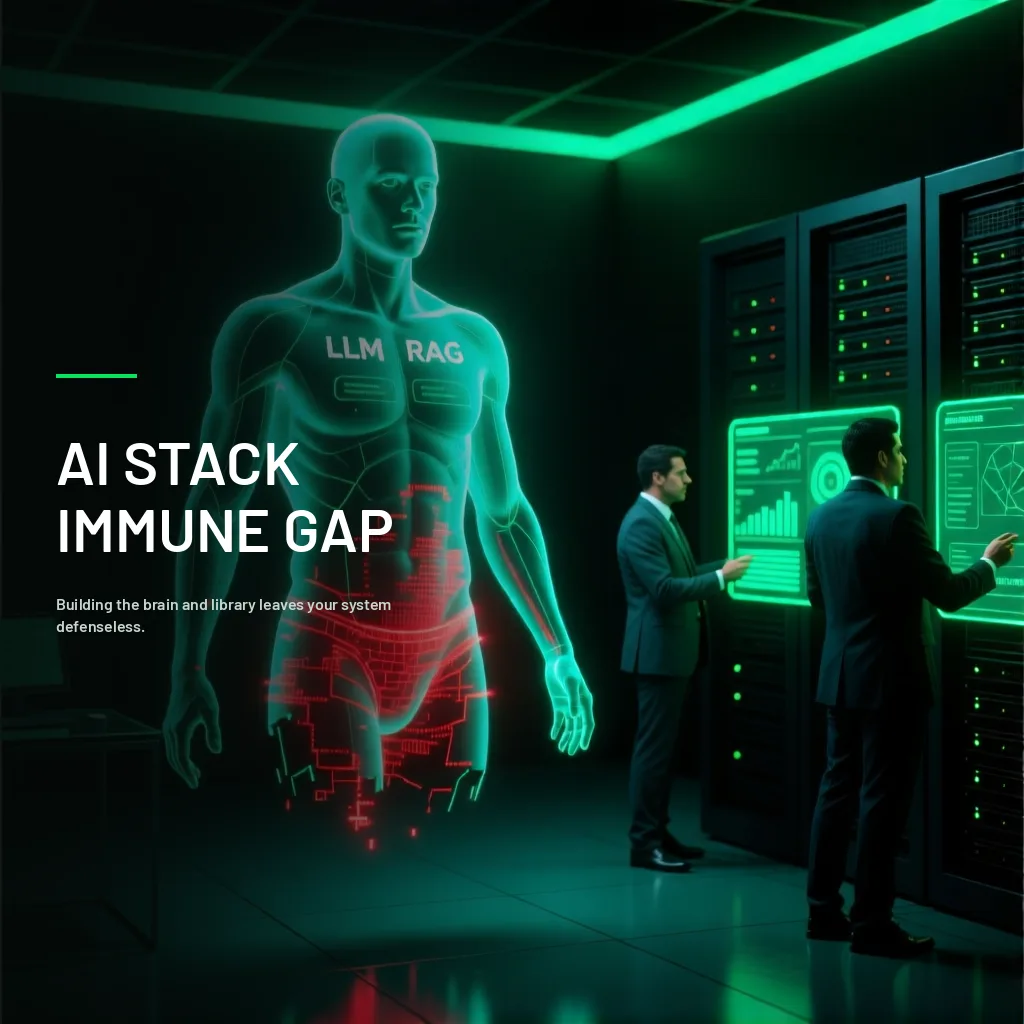
Your AI stack as a human body: why stopping at LLM + RAG leaves it without an immune system
Comments (0)
Be the first to comment.