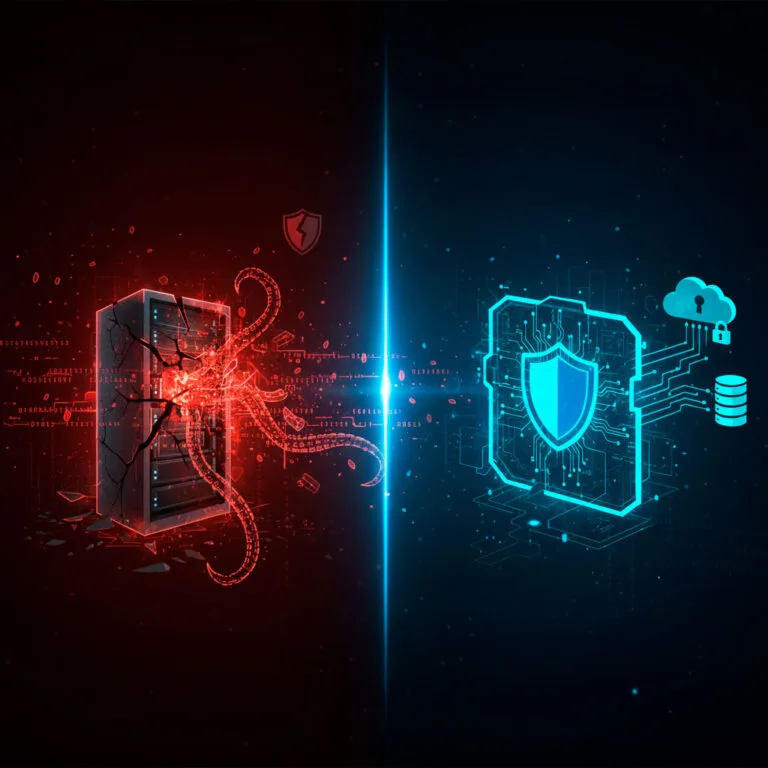
Every mobile app, every integration with a payment provider, every system talking to another system, does it through an API. It's the invisible infrastructure that makes almost all modern software possible — and also, increasingly, the favorite entry point for attackers who've learned APIs typically get far less security attention than traditional user interfaces, despite often exposing direct access to the same critical data and functions.
Why APIs Have Become Such an Attractive Target
A traditional web application generally has visible, well-tested security controls in its interface — form validation, access attempt limits, protections against common attacks. An API, especially one quickly designed to support a specific integration, often doesn't get the same level of scrutiny, because "only internal systems use it" or "only our own mobile app uses it" — assumptions an attacker can easily dismantle once they discover the endpoint and how to interact with it.
The Most Common Vulnerabilities in Enterprise APIs
Weak or inconsistent authentication, where some endpoints have robust controls and others — often added later or by different developers — have looser checks, creating uneven entry points within the same API surface.
Excessive data exposure, where the API returns more information than the client application actually needs to display, trusting the user interface to hide the excess — an attacker interacting directly with the API, bypassing the interface, can see everything that's sent, not just what's shown.
Lack of rate limiting, allowing an attacker to make thousands of requests in a short time, facilitating brute-force attacks against credentials or mass data extraction through repeated automated requests.
Direct object references without authorization checks, where changing an ID number in the request (an order or user ID, for example) allows access to another user's information simply because the API doesn't verify whether the requester actually has authorization over that specific resource.
Publicly exposed API documentation with no real need, which, while useful for legitimate developers, also gives an attacker a detailed map of the entire attack surface available.
Why Growing Integrations Amplify the Risk
Every new integration — with a payment provider, a marketing platform, a third-party system — adds a new API to protect, whether your own or your partner's. This connects directly to the risk we describe in our guide on logistics cybersecurity — every integration widens the total attack surface, and the chain's security depends on all its links, not just the strongest one.
Fundamental Controls to Protect Enterprise APIs
Robust, consistent authentication and authorization on every endpoint, with no exceptions based on the assumption that "nobody will find this" or "only an internal system uses it."
Strict authorization validation on every request, explicitly verifying the requester has permission over the specific requested resource, not just that they're authenticated in general.
Realistically configured rate limits, allowing legitimate use but blocking or alerting on anomalous request patterns suggesting malicious automation.
Minimizing returned data, delivering exactly what the client application needs, not the full object of which the interface only displays a part.
Security testing specific to APIs, since traditional pentesting tools and techniques don't always adequately cover API-specific vulnerabilities — our pentesting service includes specific assessment of this vector.
Frequently asked questions
Does my business have APIs even if I didn't build them directly?
It's very likely. Any integration with an external provider, mobile app, or third-party service probably uses APIs, even if your business didn't develop them directly but rather contracted them or uses them through a software product.
How do I know if my APIs are vulnerable without a specialized technical analysis?
It's hard to determine with certainty without technical assessment — API vulnerabilities are rarely visible at a glance, unlike more obvious problems in a traditional user interface.
Is publicly documenting my API always a risk?
Not necessarily, but it's worth evaluating whether public documentation is really necessary for your use case, or whether limiting it to authorized developers would reduce the information surface available to an attacker without affecting legitimate functionality.
How often should my business's API security be evaluated?
Every time a new integration or endpoint gets added, and periodically overall — at least annually — as part of a broader security assessment of the entire infrastructure.
Let's talk
APIs deserve the same security rigor as any other entry point into your systems. At T.I. RESCUE we include API assessment within our pentesting and cybersecurity audit services. Do you know how protected the APIs your business uses or exposes actually are? Let's talk.
Contact usSet this site as a preferred source on Google
You may also like
Comments (0)
Be the first to comment.