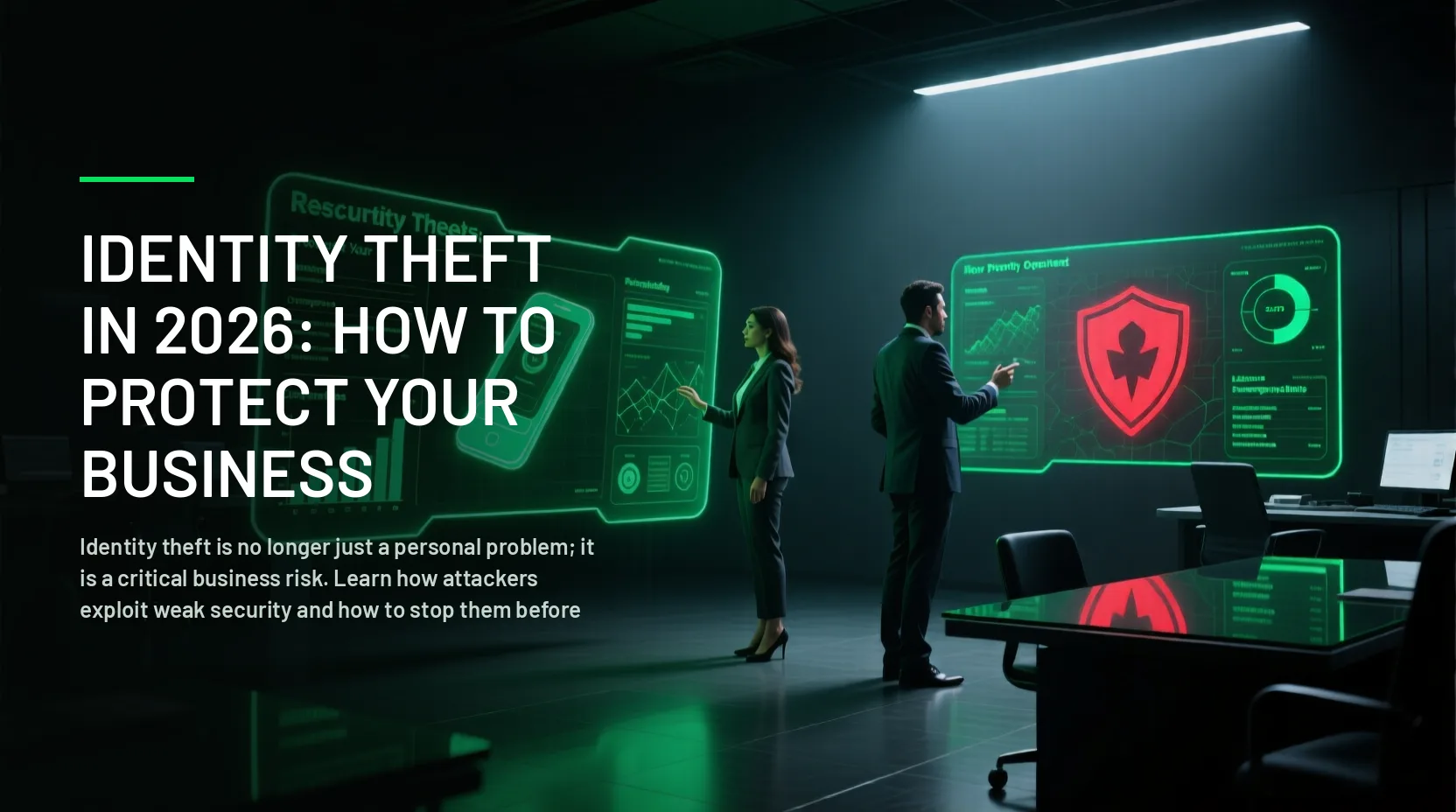
Identity theft occurs when an attacker steals personal or corporate information to impersonate an individual or organization for financial gain. For businesses, this means compromised credentials, fraudulent transactions, and reputational damage. It is a primary vector for ransomware and data breaches.

Anatomy of the attack described in the article.
Why is identity theft the top threat to businesses?
Attackers target identity because it is the key to access. In 2026, the average cost of a data breach continues to rise, with identity-based attacks accounting for a significant portion of incidents. When a hacker steals an employee’s credentials, they gain legitimate access to internal networks, email, and financial systems. This makes detection harder because the traffic looks normal. The risk is not just about money; it is about operational continuity and legal liability.
How to secure your email and domain?
Email is the primary channel for identity theft, so securing your domain is non-negotiable. You must implement SPF, DKIM, and DMARC records to prevent spoofing. These protocols verify that emails sent from your domain actually come from your servers. Without them, attackers can send emails that appear to be from your CEO or IT department. To check if your configuration is correct, you can use the free DMARC, SPF and DKIM checker tool available online to identify gaps in your setup.
What should you do if you suspect a breach?
If you suspect identity theft, act immediately. Isolate affected devices, reset all passwords for compromised accounts, and review recent activity for anomalies. Do not wait for a full investigation to secure your perimeter. Change administrative passwords first, then user passwords. Enable multi-factor authentication (MFA) if it is not already active. Document every step for legal and insurance purposes. Speed is critical in limiting the damage.
Key steps to prevent identity theft
How to protect employee credentials?
Employees are the human firewall, but they are also the weakest link. Training is not enough; you need technical controls. Enforce strong password policies and use a password manager to prevent reuse. Consider using a password generator and strength checker to help staff create complex passwords they can actually remember. Regular audits of user access ensure that former employees or those who have changed roles do not retain unnecessary privileges. This reduces the attack surface significantly.
Security is not a product you buy, but a process you follow. Identity theft prevention requires constant vigilance and adaptation to new threats.
Frequently Asked Questions
What is the difference between identity theft and data breach?
A data breach is the unauthorized access to data, while identity theft is the act of using that stolen data to impersonate someone or something for gain. A breach can lead to identity theft, but not all breaches result in it.
Can identity theft happen if I use MFA?
Yes, but it is much harder. Attackers may use MFA fatigue (bombarding users with push notifications) or SIM swapping. However, MFA significantly reduces the risk of successful credential-based attacks.
How do I know if my company has been targeted?
Look for signs like unexpected login alerts, unknown devices on your network, or employees reporting phishing attempts. Regular security monitoring and log analysis are the best ways to detect early signs.
Is identity theft a legal issue for businesses?
Yes. Depending on your jurisdiction, businesses may be liable for failing to protect customer data. This can lead to fines, lawsuits, and loss of customer trust. Compliance with standards like ISO 27001 can help demonstrate due diligence.
How often should I update my security policies?
Review and update your security policies at least annually, or immediately after a significant security event or change in business operations. Regular reviews ensure they remain relevant and effective.

Controls and monitoring that stop the attack.
Protect Your Business Identity Today
T.I. RESCUE, a Colombian cybersecurity firm based in Medellín, can help you assess your risk and implement robust defenses against identity theft.
Hablar con un especialistaSet this site as a preferred source on Google
You may also like

Comments (0)
Be the first to comment.