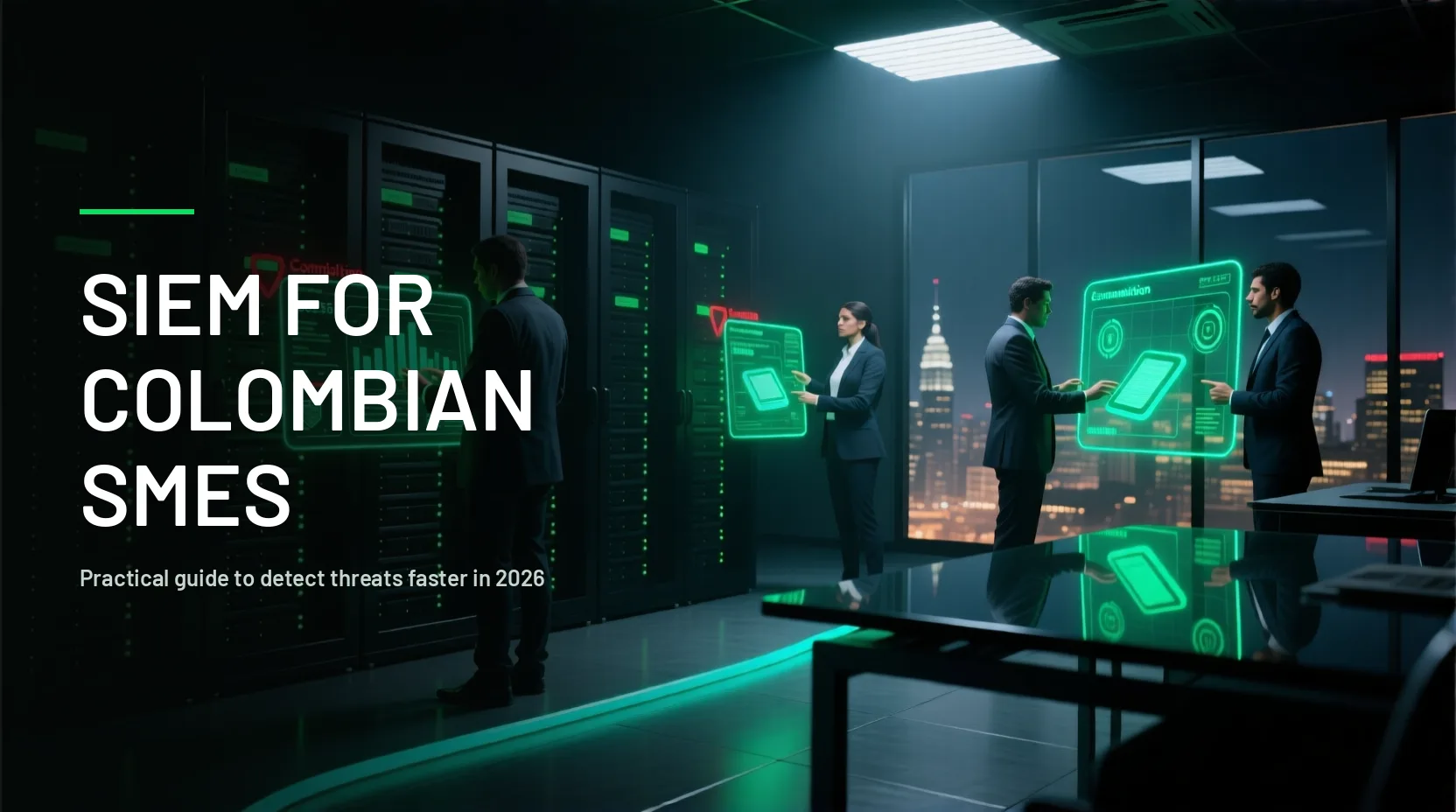
A Security Information and Event Management (SIEM) system is a centralized platform that collects, correlates, and analyzes security logs from your entire IT infrastructure. For Colombian SMEs in 2026, it is the primary tool to detect intrusions, data breaches, and internal threats in real time, moving security from reactive to proactive.
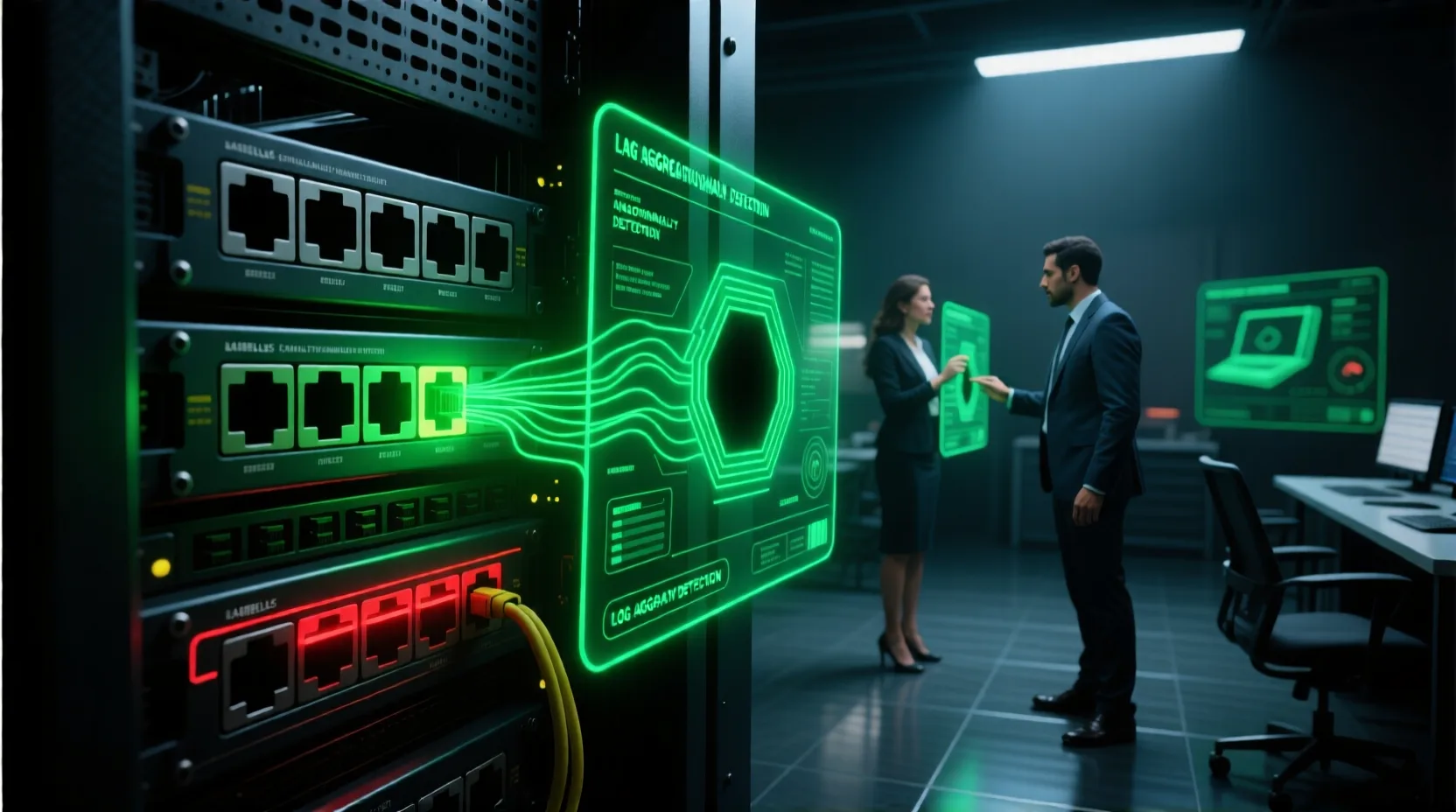
Anatomy of the attack described in the article.
What is a SIEM and how does it work?
A SIEM aggregates log data from firewalls, servers, endpoints, and cloud applications into a single dashboard. It uses correlation rules and, increasingly, machine learning to identify patterns that indicate malicious activity. Unlike simple log storage, a SIEM actively alerts your team when anomalies occur, such as unusual login times or repeated failed access attempts. This centralization eliminates the need to manually check multiple consoles, providing a unified view of your security posture.
Why do Colombian SMEs need a SIEM in 2026?
Cyber threats against small and mid-sized businesses in Colombia have become more sophisticated and automated. Ransomware attacks and business email compromise (BEC) are no longer exclusive to large corporations. A SIEM provides the visibility needed to spot these early warning signs. Without centralized monitoring, many attacks go unnoticed for weeks or months, leading to significant financial and reputational damage. Implementing a SIEM is now a baseline requirement for maintaining business continuity and protecting client data.
How to choose the right SIEM provider
Selecting a SIEM requires balancing cost, scalability, and ease of use. For SMEs, cloud-native solutions are often more cost-effective than on-premise hardware. Look for vendors that offer pre-built detection rules for common threats like ransomware and phishing. Ensure the platform integrates easily with your existing tools, such as Microsoft 365 or AWS. Additionally, consider the vendor's support capabilities in Spanish and their local presence in Colombia, which can be crucial during critical incidents.
How to start implementing a SIEM?
Begin by inventorying all data sources that generate security logs, including servers, firewalls, and identity providers. Prioritize high-risk assets for initial monitoring. Start with a pilot phase covering critical infrastructure before expanding to the entire network. Define clear alert thresholds and response protocols with your IT team. Remember that a SIEM is only as effective as the team interpreting its alerts, so invest in training alongside the technical deployment.
Preguntas frecuentes
Is a SIEM too expensive for a small business?
Cloud-based SIEMs have reduced entry costs significantly. Many providers offer tiered pricing based on data volume, making it affordable for SMEs to start with essential monitoring.
What is the difference between a SIEM and a log management tool?
Log management stores and retrieves logs, while a SIEM actively analyzes them for threats using correlation rules and alerts, providing real-time security monitoring.
How long does it take to implement a SIEM?
A basic implementation can take 4 to 8 weeks, depending on the number of data sources and the complexity of your environment. Full optimization may take several months.
Do I need a dedicated security analyst for a SIEM?
While a dedicated analyst is ideal, many SMEs integrate SIEM monitoring into existing IT roles. Managed Security Service Providers (MSSPs) can also handle 24/7 monitoring for you.
Controls and monitoring that stop the attack.
Secure Your Business with T.I. RESCUE
T.I. RESCUE, a Colombian cybersecurity company based in Medellín, helps SMEs implement effective SIEM strategies tailored to their specific needs.
Hablar con un especialistaSet this site as a preferred source on Google
You may also like
Comments (0)
Be the first to comment.