
Educational institutions face a particular combination of factors that makes them vulnerable: limited IT budgets, a large number of users with varying levels of security awareness (students, parents, teachers, administrative staff), and — in the case of schools — data belonging to minors, which receives special protection under Colombian law. This combination has made the education sector an increasingly frequent attack target, something many institutions still haven't adjusted their budgets or strategy to address.
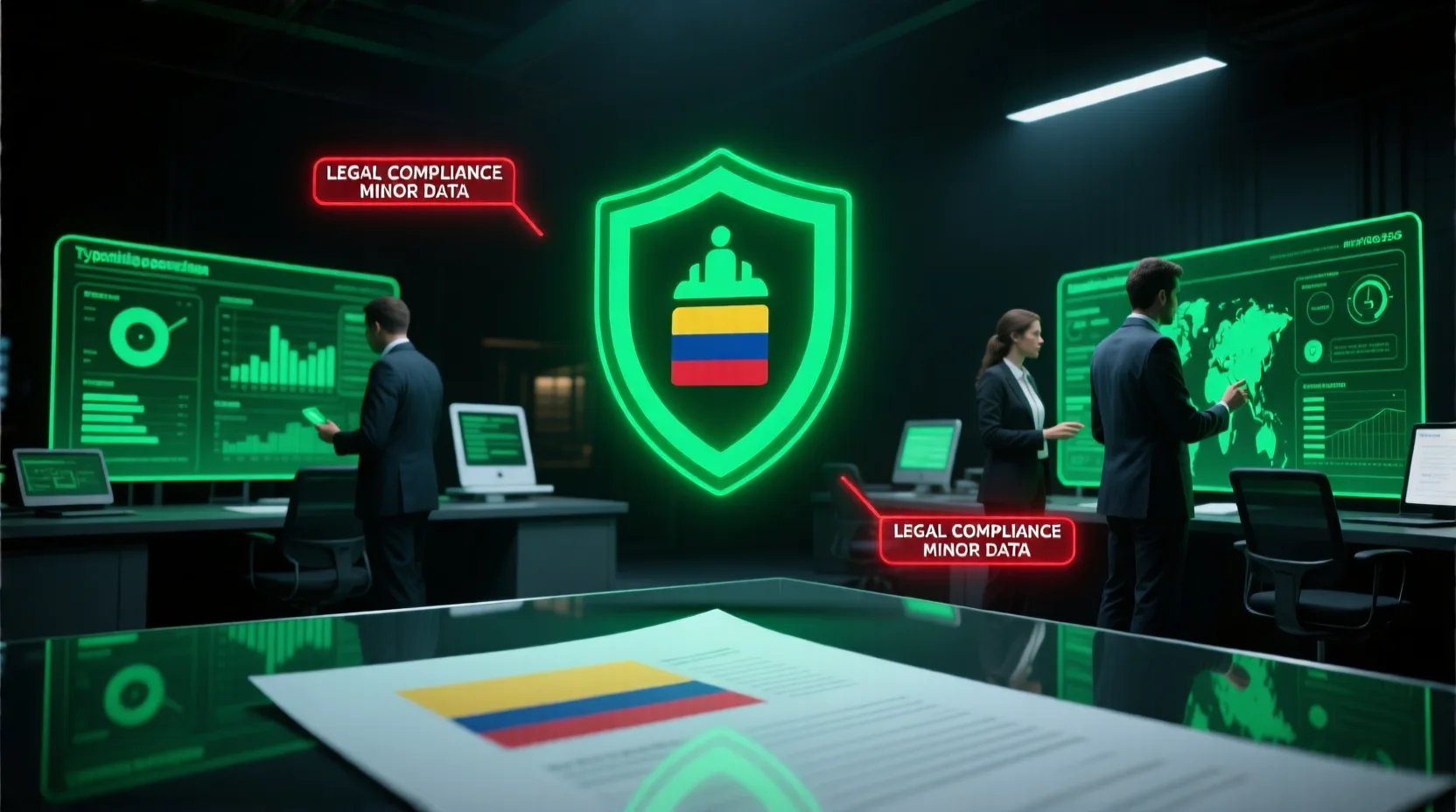
Controls and monitoring that stop the attack.
Why Minors' Data Requires Special Treatment
While Law 1581 doesn't classify age as sensitive data per se, processing data belonging to children and adolescents is subject to a reinforced protection standard under Colombian legislation, which prioritizes the best interest of the minor above other considerations. This means an educational institution faces not only the general obligations under Law 1581, but an additional level of responsibility when handling information about minor students — grades, health information reported by parents, family contact data, and in some cases socioeconomic information used for scholarships or aid.
The Most Common Attack Vectors in the Sector
Ransomware targeting administrative infrastructure, halting enrollment systems, grading, and parent communication — with the added pressure that the start or end of an academic term creates windows particularly sensitive to disruption.
Phishing targeting parents, impersonating official institutional communications to request tuition payments or "updated" contact information, exploiting the trust parents place in school communications.
Student accounts as an entry point, since educational systems typically grant access to hundreds or thousands of student accounts with weaker security than administrative staff accounts — accounts an attacker can use as an entry point toward more sensitive systems.
Third-party educational platforms integrated into the main system (virtual learning tools, academic management systems), each representing an additional attack surface outside the institution's direct control.
Priority Controls for Educational Institutions
Segmentation between student networks, administrative staff, and critical systems, so that compromising a student account doesn't automatically translate into access to grading or financial information systems.
Clear verification of official communication channels with parents, consistently establishing and communicating how the institution actually requests payments or information updates, so any deviation is easier to spot.
Data retention policies for graduated students, since indefinitely keeping former students' information without a clear operational reason increases risk with no corresponding benefit.
Security training adapted to each audience — teachers, administrative staff, and in the case of higher education institutions, also students — recognizing that each group faces different threats and has different awareness levels.
Assessing the security of third-party educational platforms before integrating them, verifying they meet reasonable data protection standards, especially when processing information about minors.
The Particular Challenge of Limited Budgets
Many educational institutions, especially mid-sized and small private schools, operate with IT budgets considerably smaller than comparably sized businesses in other sectors. This makes prioritization critical: instead of trying to implement every possible control simultaneously, first identifying the systems that handle the most sensitive information (grades, financial data, minors' information) and concentrating available resources there tends to be the most effective strategy.
Frequently asked questions
Do small schools also need to comply with Law 1581?
Yes, without exception for size. The level of measures can be adjusted to the institution's capacity, but the obligation to protect the personal data it handles — including minors' data — applies regardless of size.
What do I do if I suspect my institution's student information was compromised?
Follow the same process as any incident involving personal data: immediate technical containment, scope assessment, and compliance with the reporting obligations we cover in our guide on when reporting a cyberattack is legally required.
Do universities face different risks than schools?
They share many risks, but universities tend to handle larger data volumes, research with possible commercial value, and a student population no longer under the special protection for minors — though they still handle sensitive personal data requiring protection.
How do I prioritize security with a limited IT budget?
Start by identifying which systems handle the most sensitive and critical information, and concentrate available resources there before trying to uniformly cover the entire infrastructure.
Let's talk
Protecting students goes beyond the classroom — it includes protecting their personal information with the same rigor the law requires. At T.I. RESCUE we work with educational institutions on cybersecurity audits adapted to the sector's budgets and needs. Has your institution assessed how it protects its students' data? Let's talk.
Contact usSet this site as a preferred source on Google
You may also like

Comments (0)
Be the first to comment.