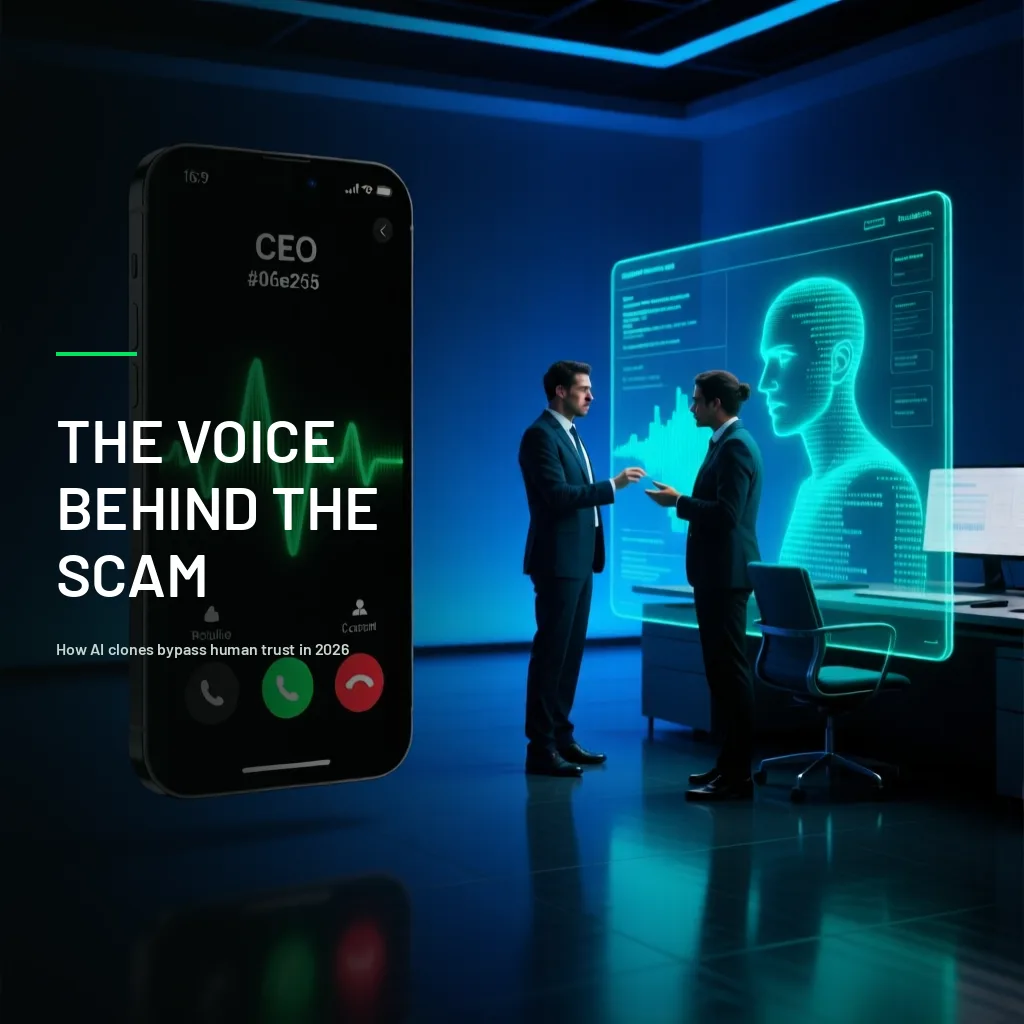
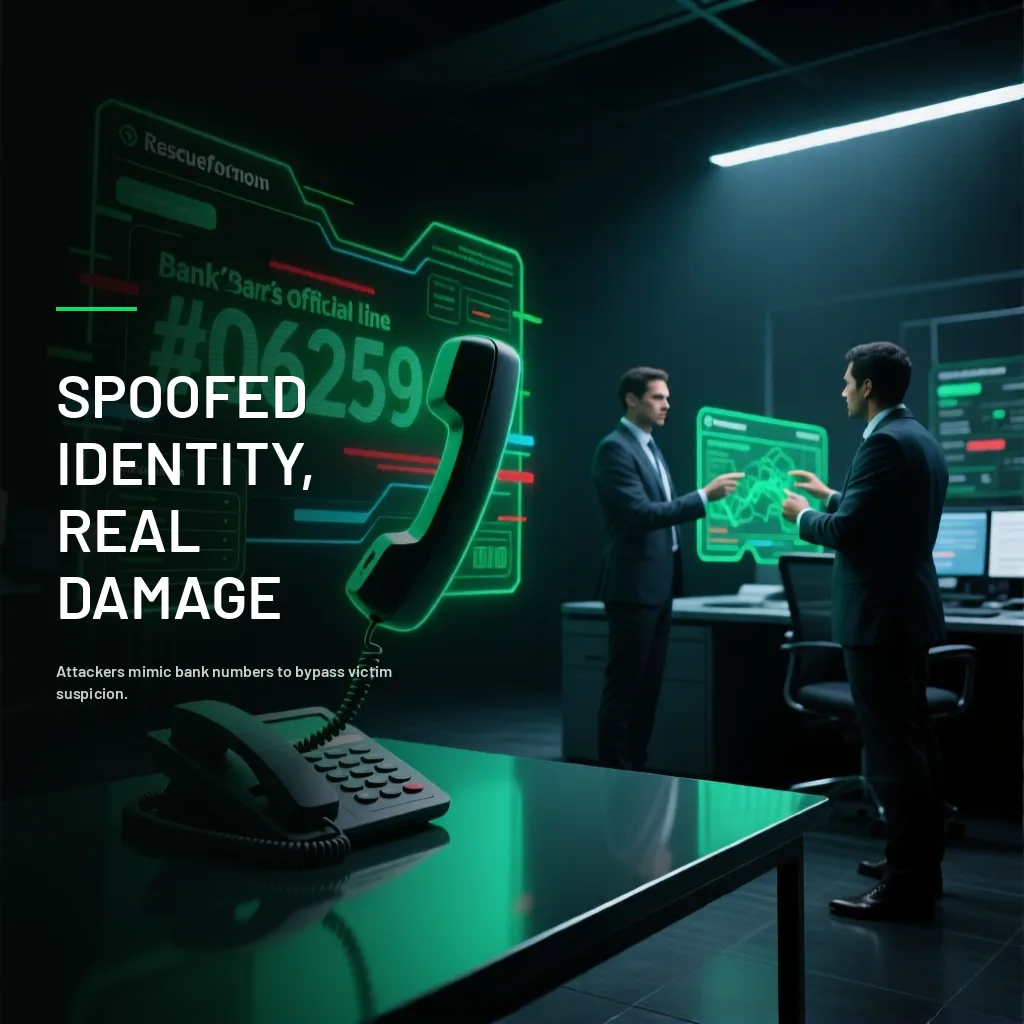
Vishing, or voice phishing, is a social engineering attack where fraudsters use phone calls to trick employees into revealing sensitive data or executing unauthorized transactions. It is one of the fastest-growing cyber threats in 2026, leveraging AI-generated voices and deepfake technology to mimic trusted colleagues or executives. Unlike email phishing, vishing creates a sense of urgency and pressure that often bypasses standard security protocols.
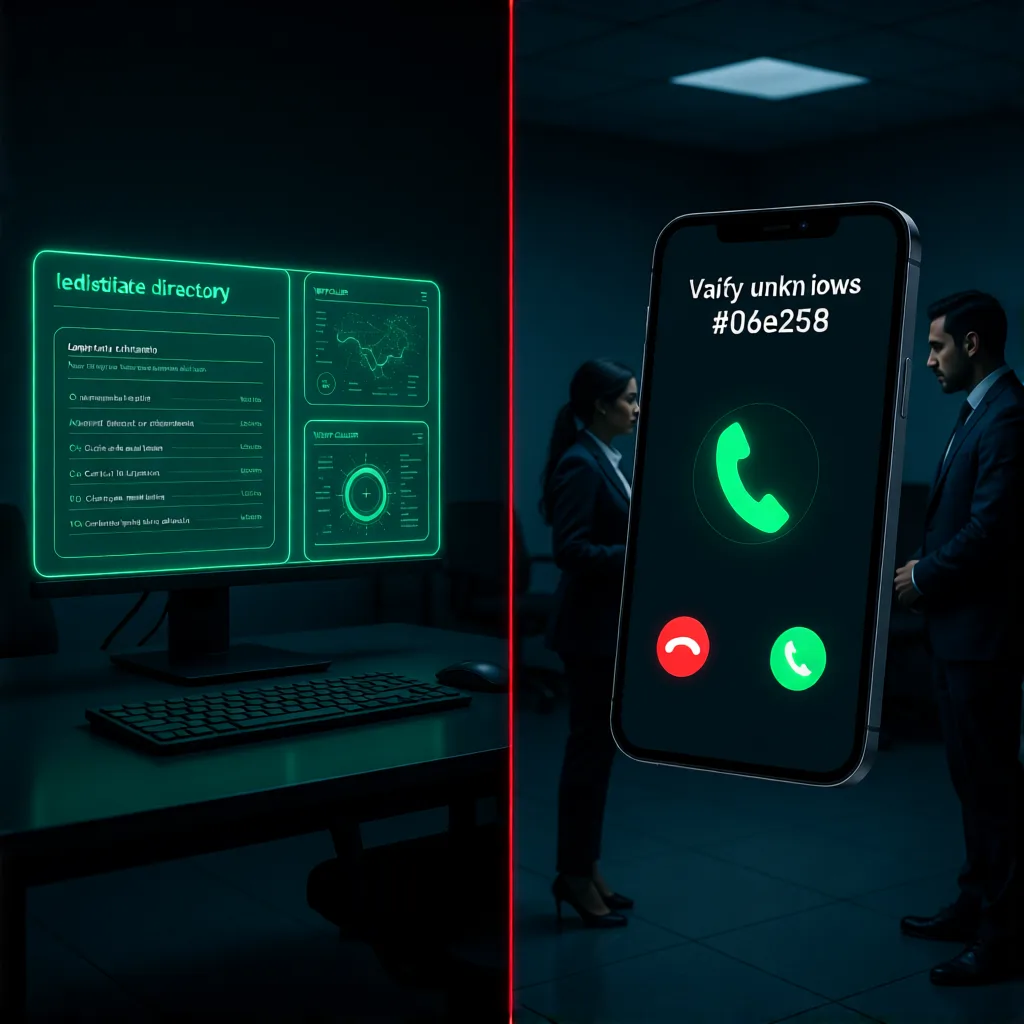
Anatomy of the attack described in the article.
What is vishing and how does it work?
How can you detect a vishing attempt?
Key signs of a vishing attack
How to protect your business from vishing?
Frequently asked questions
What is the difference between vishing and phishing?
Phishing typically occurs via email or SMS, while vishing is conducted over the phone. Vishing is often more effective because it allows for real-time manipulation and creates a sense of immediate urgency.
Can AI voice cloning be detected by the human ear?
In many cases, no. Advanced AI can replicate tone, pitch, and cadence with high fidelity. Verification through trusted channels is the only reliable defense.
What should I do if I receive a suspicious call?
Hang up immediately. Do not engage or provide any information. Report the call to your IT security team and verify the request through a known, trusted channel.
Is vishing more common in Colombia than in other regions?
While vishing is a global threat, businesses in Latin America, including Colombia, are frequent targets due to the high volume of remote work and the rapid adoption of digital financial services.
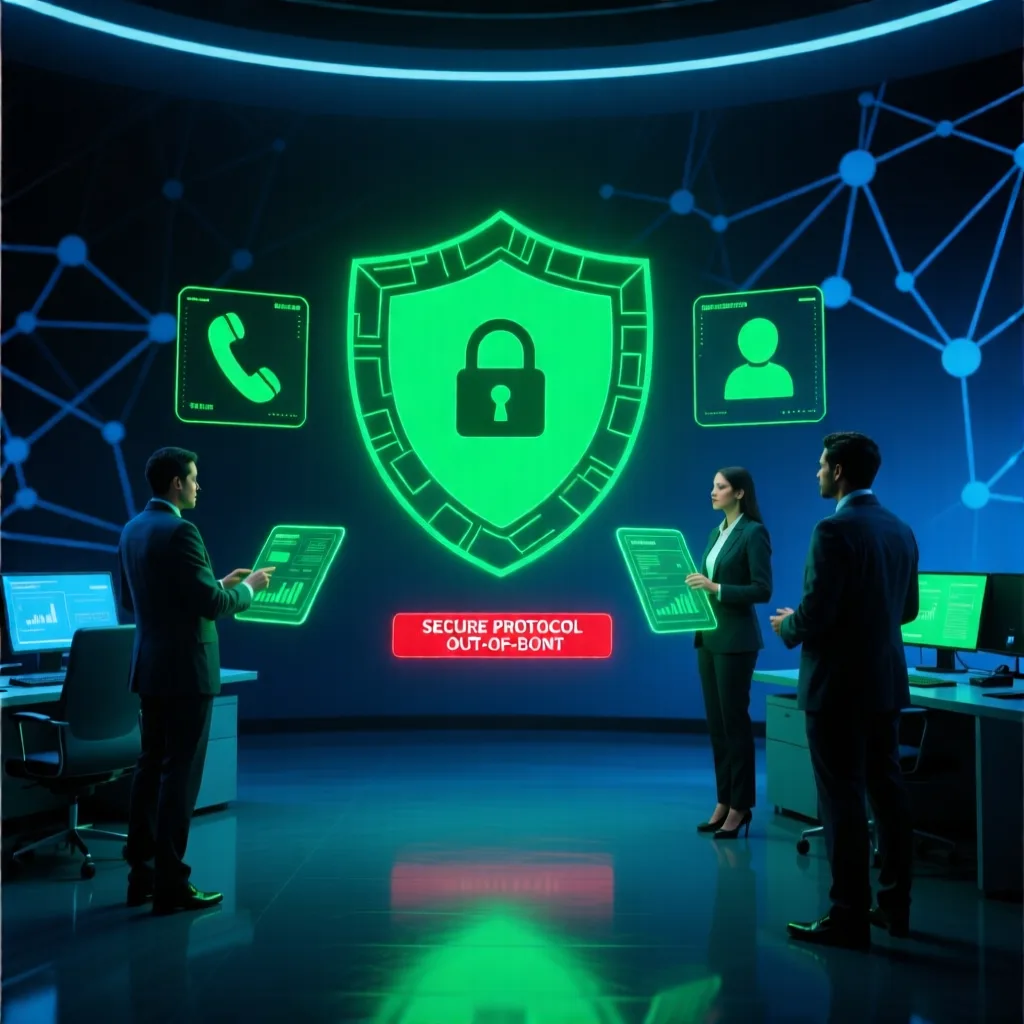
Controls and monitoring that stop the attack.
Secure Your Voice Channels
Hablar con un especialistaYou may also like

Comments (0)
Be the first to comment.