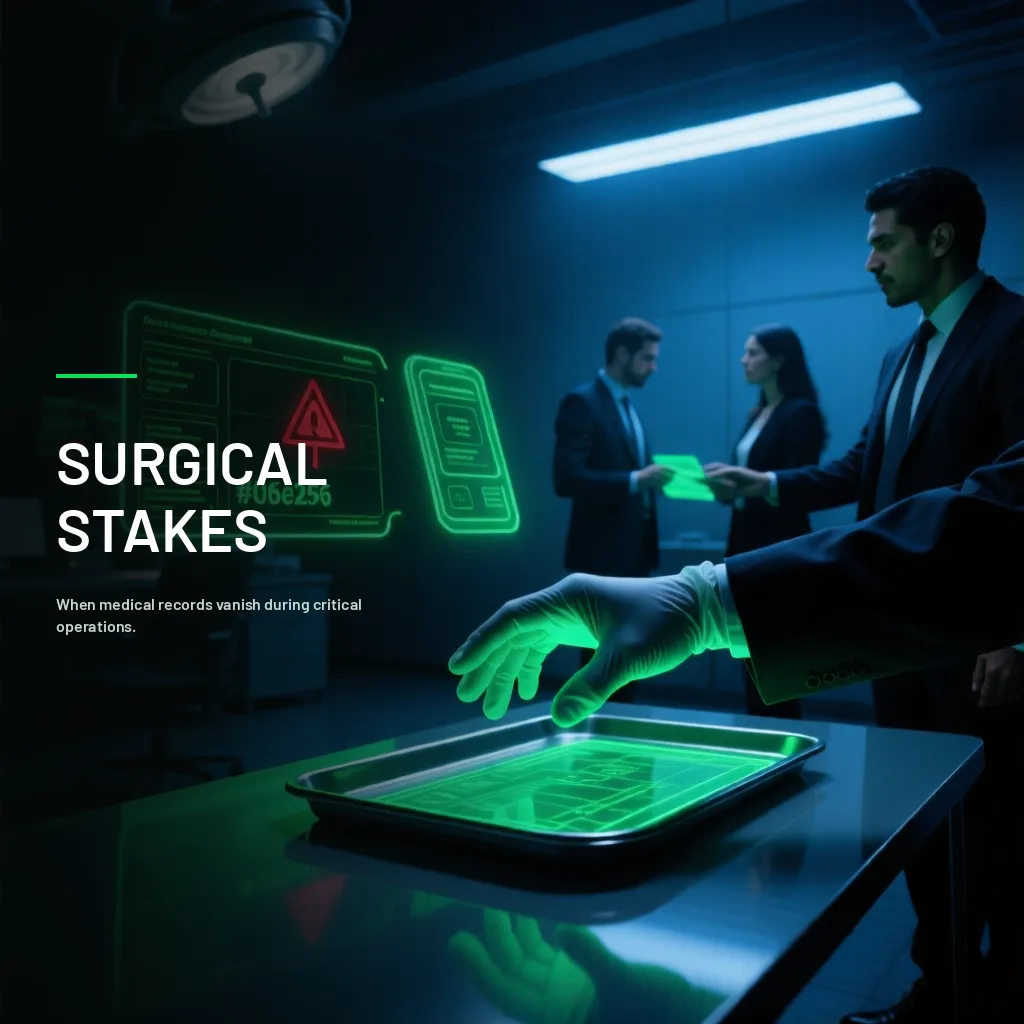
There's a brutal difference between a clothing store not being able to process sales for a few hours, and a hospital not being able to access the medical record of a patient currently in surgery. Ransomware groups know this, and that difference is exactly what makes healthcare one of the most consistently attacked sectors globally — not necessarily because hospitals have worse security than other industries, but because the pressure to pay fast is higher than in almost any other type of organization.
The Cold Logic Behind Target Selection
Ransomware groups operating under the ransomware-as-a-service model optimize for a single variable: probability of fast payment. A hospital with patients in the ER, scheduled surgeries, and monitoring systems dependent on digital infrastructure doesn't have the same negotiating room as a business whose operations can pause for a few days without irreversible consequences. That structural urgency, not the quality of its technical defenses, is what makes healthcare a systematically attractive target.
What's at Stake Beyond the Money
In most sectors, a ransomware attack is fundamentally a financial and reputational problem. In healthcare, the conversation changes entirely: patient monitoring systems that depend on compromised networks, medical records inaccessible right when a doctor needs them for a critical decision, and network-connected medical equipment that can be indirectly affected during an incident. Supersalud's Resolution 2654 explicitly requires healthcare operators to be able to guarantee service continuity precisely for this reason — it isn't a bureaucratic requirement, it responds to a real, documented risk.
Why Healthcare Infrastructure Is Particularly Vulnerable
Several structural factors, common to hospitals and clinics across the region, contribute to this vulnerability:
Medical equipment running outdated operating systems. A lot of specialized medical equipment runs on old software versions that can't easily be updated without risking the equipment's certification or function itself, leaving known vulnerabilities unpatched for years.
Poorly segmented networks. In many healthcare facilities, administrative systems, electronic medical record systems, and medical equipment share the same network without sufficient isolation, allowing an attacker who gets in through a weak administrative point to eventually reach critical systems.
High turnover and limited cybersecurity training among staff. Medical and administrative healthcare staff, focused on clinical work, frequently don't receive the same security training as other sectors that were more digitally native from the start.
Limited IT budgets against highly critical infrastructure. Cybersecurity investment competes directly with investment in medical equipment and clinical staff, a budget tension other sectors don't face in quite the same way.
What an Effective Defense Actually Looks Like
Defense in the healthcare sector has to account for these structural limitations rather than ignore them:
Frequently asked questions
Are small hospitals a target too, or only large healthcare networks?
Any healthcare operator is a potential target. The automated attack model doesn't discriminate by institution size when scanning for vulnerabilities.
Is it true some ransomware groups avoid attacking hospitals?
Some have publicly claimed that policy, but their affiliates' actual compliance is inconsistent. It shouldn't be assumed as real protection — we cover this in more detail in our guide on [the most active ransomware groups in the region](https://tirescue.com/en/blog/grupos-ransomware-latinoamerica/).
What makes recovery from an attack on a hospital different from other sectors?
The time pressure is much greater, since system unavailability can have direct consequences for patient care, not just business operations.
Does Resolution 2654 require specific technical measures against ransomware?
It requires continuity capability and protection of electronic medical records, which in practice requires concrete technical measures against scenarios like ransomware, even though the regulatory text doesn't always use that specific term.
Let's talk
Healthcare faces a different kind of attack pressure than any other industry, and defense needs to be designed for that specific reality. At T.I. RESCUE we work with healthcare operators on [cybersecurity audits](https://tirescue.com/en/auditoria-de-ciberseguridad/) focused on critical patient-care systems and on [24/7 incident response](https://tirescue.com/en/respuesta-ante-incidentes-247/) designed to minimize impact on medical care. Has your healthcare institution never properly assessed this? [Book a consultation](https://tirescue.com/en/contacto-ti-rescue/).
Contact usYou may also like
Comments (0)
Be the first to comment.