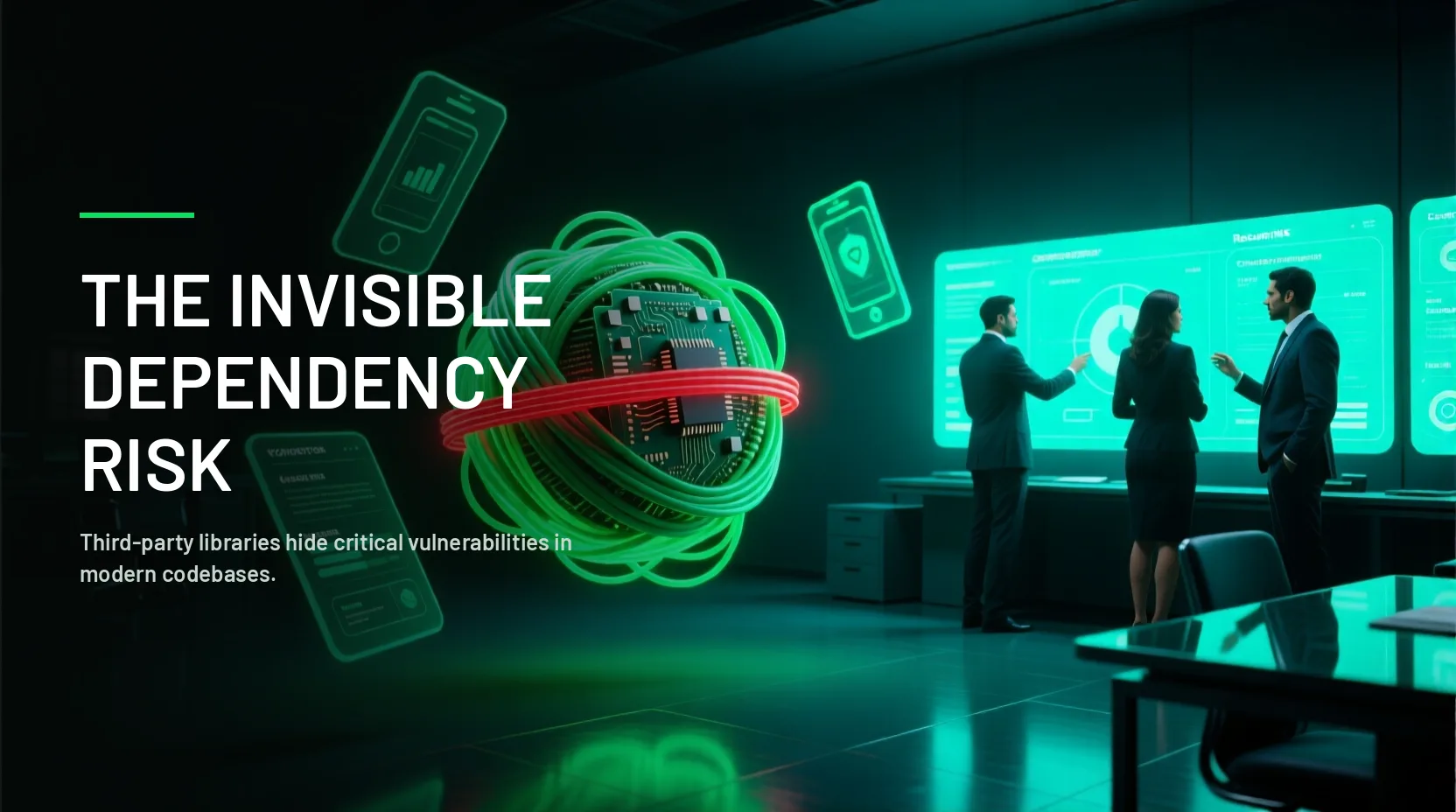
No developer writes all their software from scratch. Every modern application depends on dozens, sometimes hundreds, of third-party libraries and components — code written by other people, maintained by other people, and blindly trusted by most development teams who simply install and use it. A software supply chain attack exploits exactly that trust: instead of directly attacking the target company, the attacker compromises one of those third-party components, knowing it will be automatically distributed to everyone using it.
Why This Vector Has Become So Attractive to Sophisticated Attackers
Compromising a single popular library, used by thousands of applications, is exponentially more efficient for an attacker than compromising each application individually. A single successful compromise point in the supply chain can give potential access to hundreds or thousands of downstream organizations, many of which will never know the component they trusted was compromised until it's already too late.
The Most Common Variants of This Type of Attack
Direct compromise of a popular library or package, where an attacker manages to insert malicious code into a legitimate update of a widely used component, either by compromising the original maintainer's credentials or through social engineering against the team maintaining the project.
Package typosquatting, where the attacker publishes a malicious package with a name very similar to a popular legitimate one (a swapped letter, for example), betting some developers will install it by typo.
Compromise of build or deployment tools, inserting malicious code not directly into the final product, but into the tools used to build and deploy the software, which can go unnoticed for much longer.
Attacks against managed service providers, where compromising a provider with access to multiple clients' infrastructure gives the attacker an entry point into all of them simultaneously — the same risk pattern we describe in our guide on vendor management under Circular 007.
Why These Attacks Are So Hard to Detect
The compromised code arrives disguised as a legitimate update, often digitally signed with the compromised maintainer's real credentials, which means traditional integrity checks detect nothing abnormal. And since the compromised component may have been trustworthy for years before the attack, many development teams don't apply the same scrutiny to existing dependency updates that they'd apply to installing a completely new component.
Controls That Actually Reduce the Risk
Complete inventory of software dependencies, knowing exactly which third-party components your infrastructure and applications use, something many organizations don't have precisely documented.
Monitoring known vulnerabilities in dependencies, using tools that automatically alert when a vulnerability is discovered in a component your infrastructure uses, without relying on constant manual review.
Integrity verification before applying updates, especially on critical components, instead of automatically applying any update with no review layer.
Least-privilege principle also applied to build and deployment tools, limiting what access these tools have to the rest of the infrastructure, so a compromise there doesn't automatically translate into total compromise.
Security assessment of managed service providers, applying the same evaluation rigor you'd apply to any other access point into your infrastructure, since a compromised provider is functionally equivalent to your own breach.
Why This Matters to Any Business, Not Just Ones That Develop Software
Even businesses that don't write their own code depend on third-party software — management systems, e-commerce platforms, administrative tools — each with its own dependency chain. Exposure to this risk doesn't require having an internal development team; simply using any modern software is enough.
Frequently asked questions
How do I know if my business was affected by a supply chain attack?
It requires active monitoring of known vulnerabilities in the dependencies your infrastructure uses, and in cases of publicly confirmed compromise, checking whether your organization uses the affected component and in which version.
Is using open-source software riskier than proprietary software in this regard?
Not necessarily — both have supply chains that can be compromised. Open source has the advantage of greater source code visibility, but that doesn't guarantee every vulnerability gets caught in time.
What should I demand from a software vendor before trusting their product?
Evidence of their own development security practices, transparency about their dependencies, and a clear notification process in case they discover a vulnerability or compromise in their supply chain.
Does a traditional firewall or antivirus detect this type of attack?
Generally not effectively, since the malicious code arrives disguised as a legitimate, trusted update — specific dependency management controls and vulnerability monitoring are needed to detect this vector.
Let's talk
Trust in third-party software can't be blind — it requires active, ongoing verification. At T.I. RESCUE we help businesses assess and protect their software supply chain through our DevSecOps and cybersecurity audit services. Does your business know exactly which third-party components its infrastructure uses? Let's talk.
Contact usSet this site as a preferred source on Google
You may also like
Comments (0)
Be the first to comment.